
Learn how you can get involved and contribute to the Tal Research Group’s newly launched study, CAPRIO, leveraging non-invasive image, video and survey data to define a novel clinical vital sign
Our Mission
At the Tal Research Group, we are driven by fundamental questions: Why doesn't everyone "bounce back" from an infection? Why do chronic illnesses disproportionately affect females? And how can we tell the difference between a protective immune response and a catastrophic one?
We are a passionate team of immunoengineers at MIT committed to answering these questions for the millions suffering from poorly understood and often stigmatized infection-associated chronic illnesses like Long COVID and Chronic Lyme disease. Our research operates at the host-pathogen interface, exploring the co-evolutionary arms race between host and microbe from initial infection through to clearance or chronic colonization.
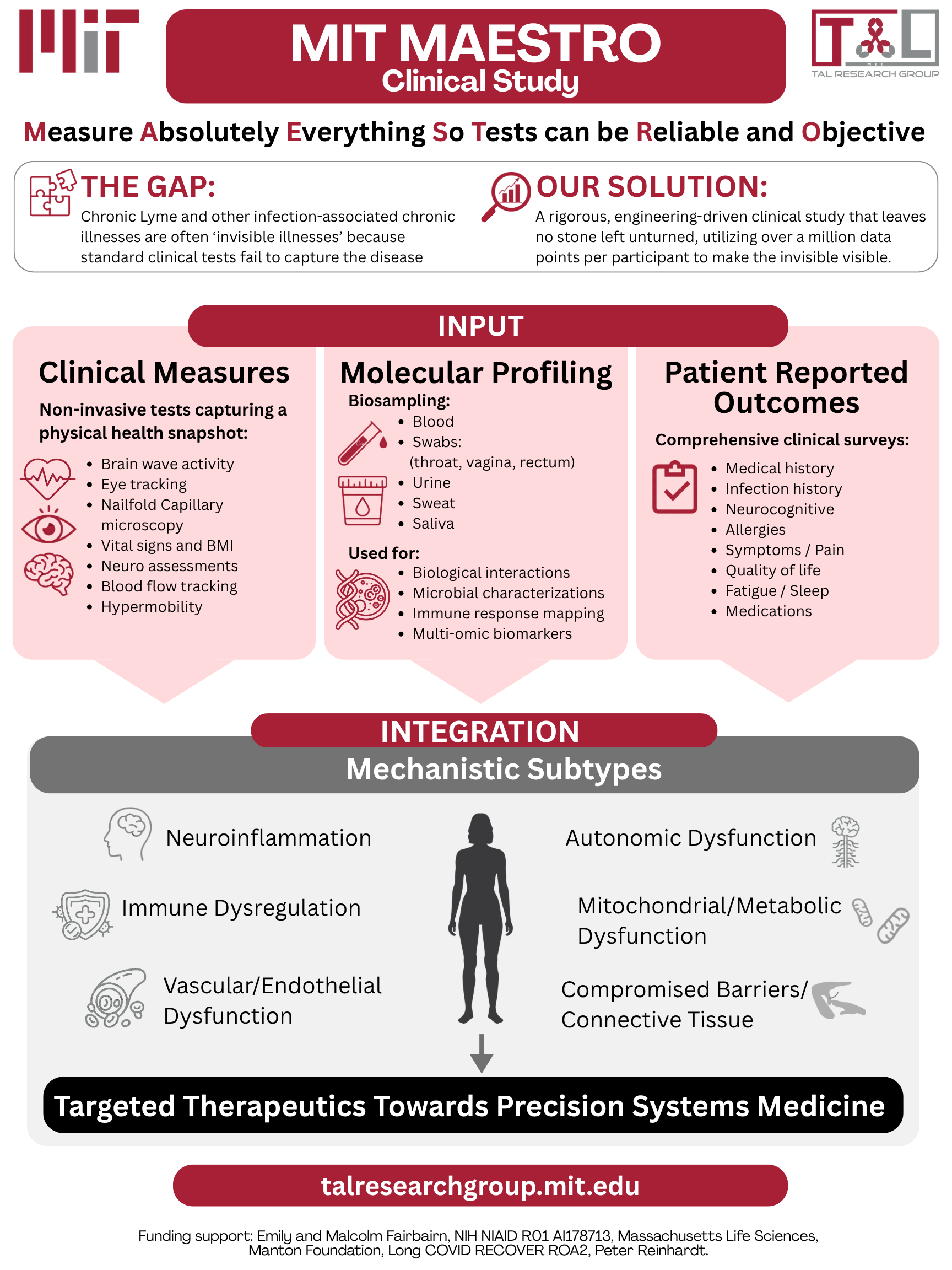
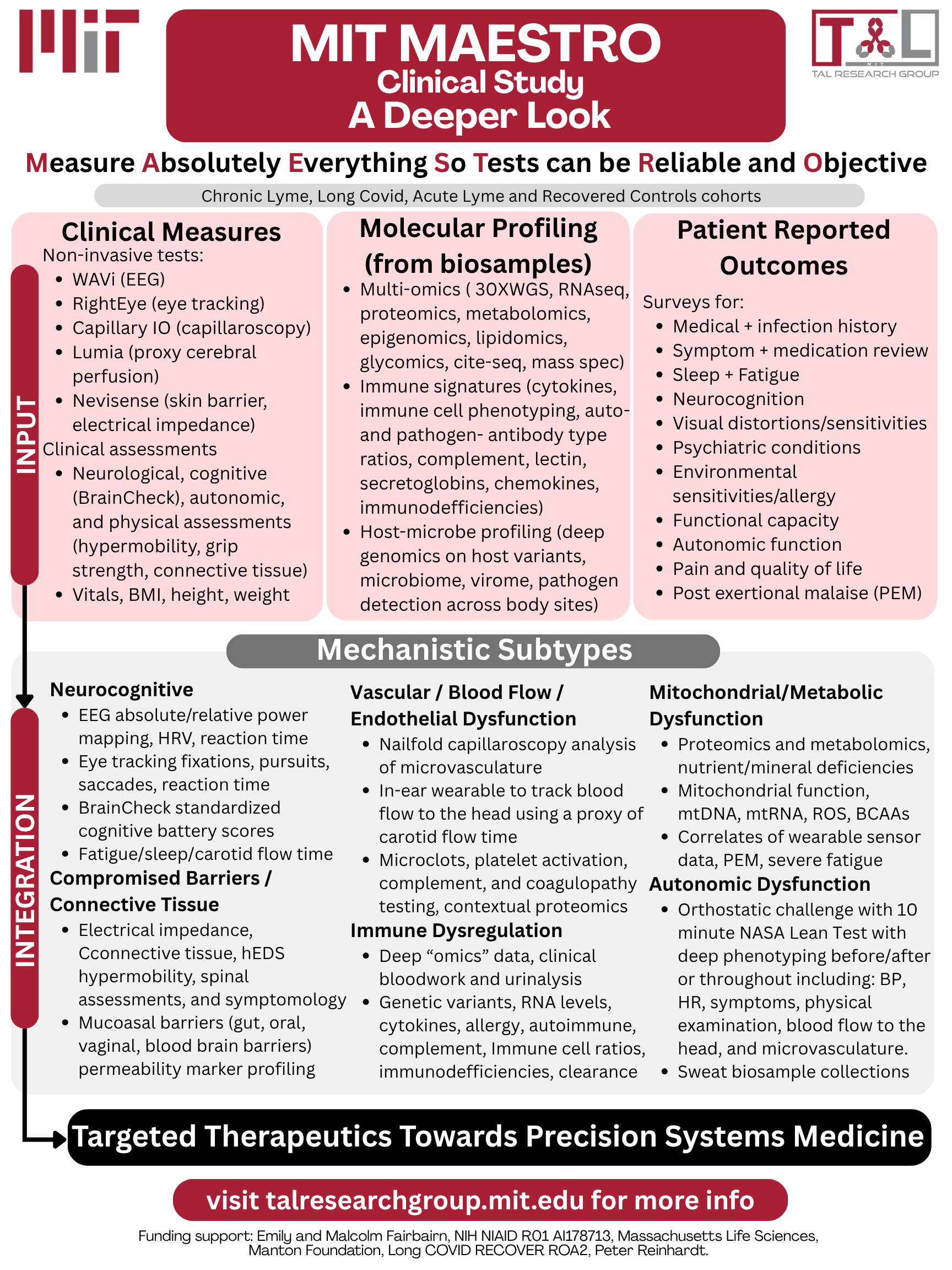
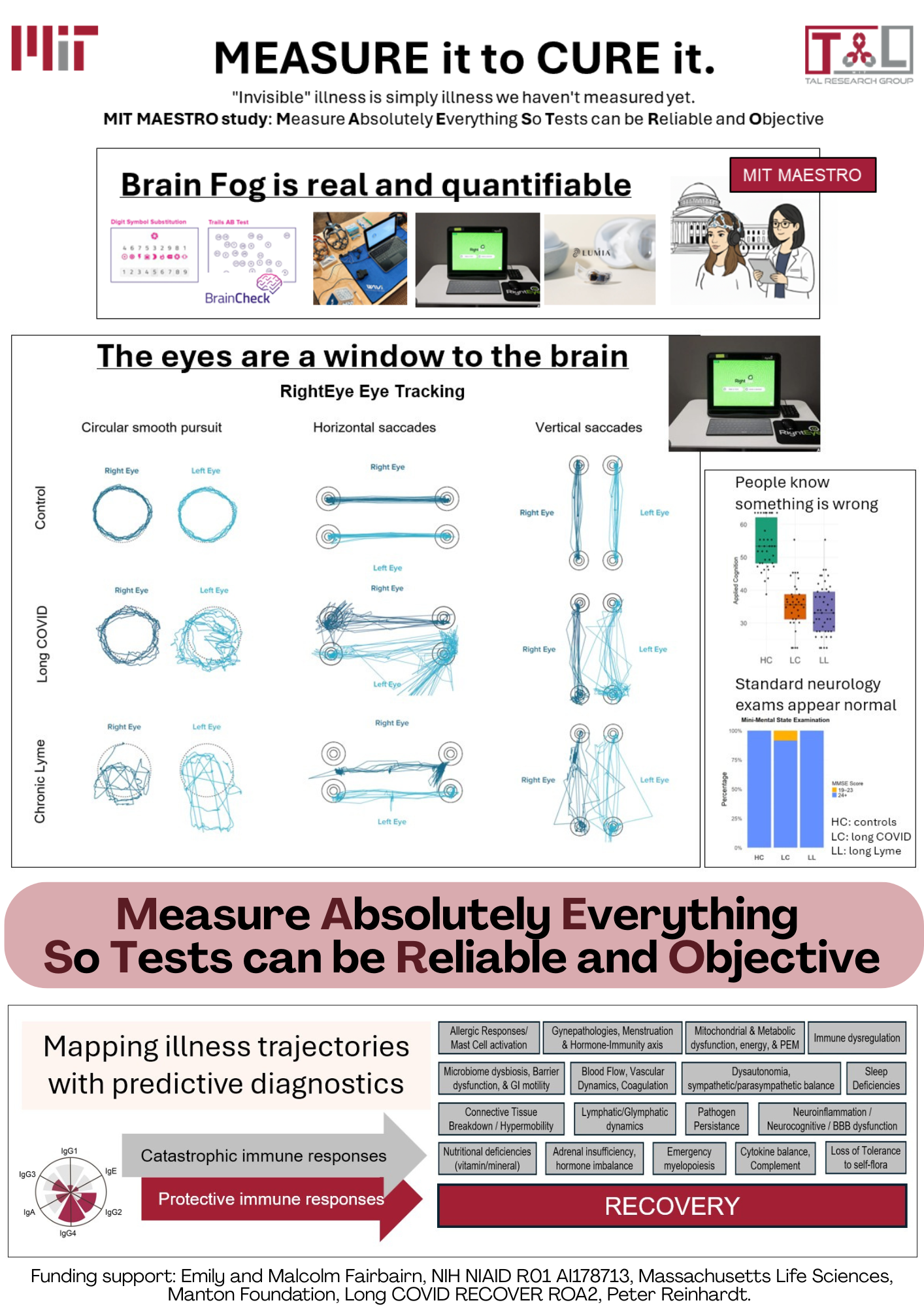
Our mission is to translate deep scientific inquiry into real-world solutions that help identify more targeted therapeutic approaches with the hope that eventually it would be possible to intervene before the devastation of chronic illness can take hold. We combine preclinical models with MAESTRO, the largest clinical study at MIT, in a "leave no stone unturned" approach to capture a comprehensive picture of disease. By pioneering predictive diagnostics through high-resolution antibody profiling, we are attempting to map the trajectory of the immune response. By comparing patient-reported outcomes to objective measurements that integrate deep multi-omics data with deep objective clinical assessments, we are dedicated to writing the missing chapter in the medical textbooks characterizing infection-associated chronic illnesses. Our ultimate goal is to identify who is at greatest risk and why. By creating the tools to predict an illness's course, we can empower clinicians, improve clinical trials, and guide the development of novel therapeutics.

MAESTRO at a glance

Click here to learn more about our research!
Our Studies
-
Sex Differences - How men and women differ in their immune responses and in how they develop chronic illnesses, including the roles of sex hormones and the immune system.
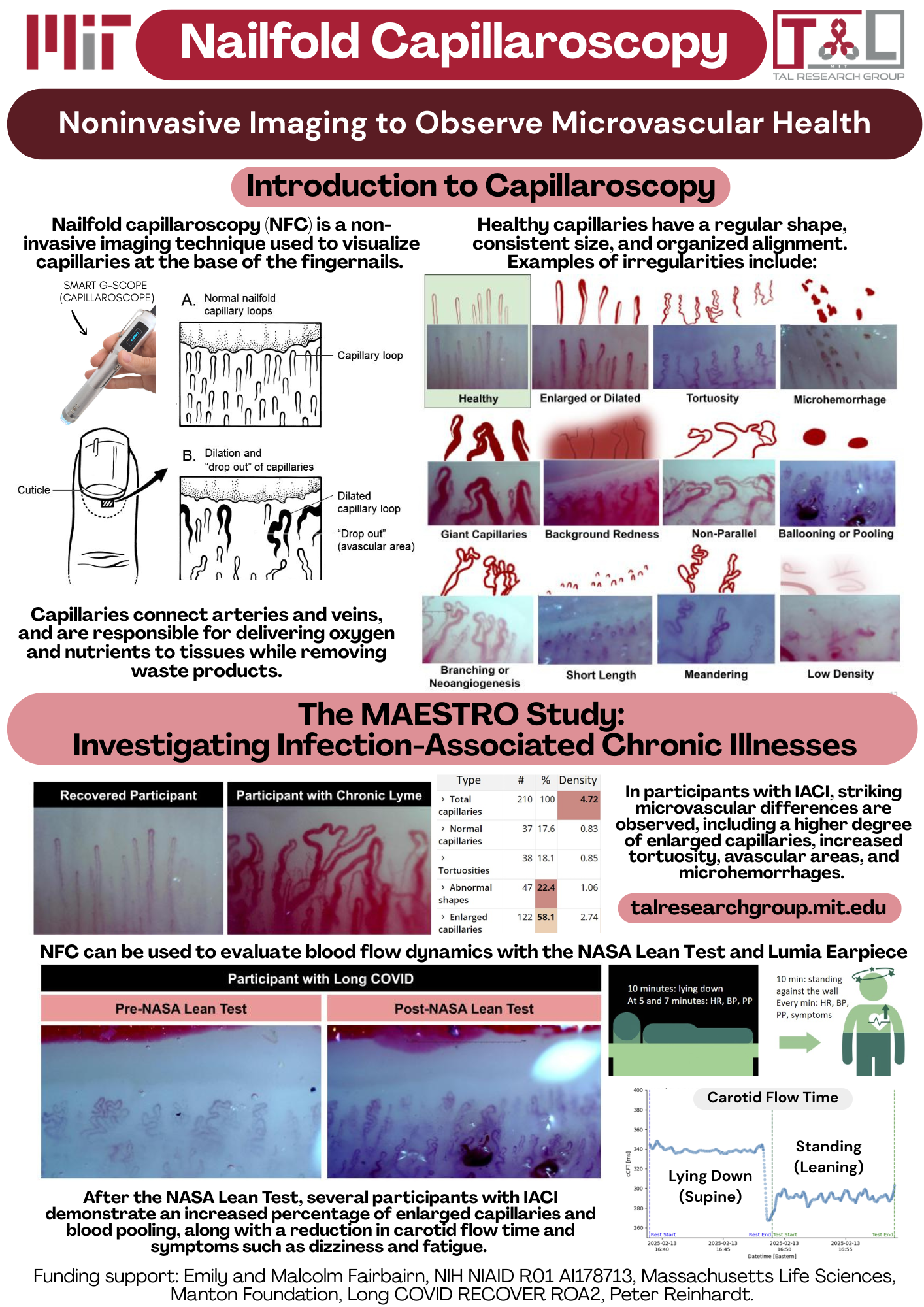
Mechanisms Behind Chronic Illness - Exploring how the immune system, nervous system, and other processes cause chronic illness, using advanced, non-invasive tests to study brain function, cognition, and blood flow in our MAESTRO clinical study.
Biomarkers of Chronic Illness - Collecting and studying biological samples to find new indicators (biomarkers) of chronic diseases.
Immune-Pathogen Interactions - How infections trigger immune reactions or escape immune defenses, particularly in Lyme disease, to find better treatments.
Links Between Related Chronic Illnesses - The similarities and overlaps among conditions like chronic Lyme, Long COVID, ME/CFS, POTS, mast cell disorders, endometriosis, fibromyalgia, and Ehlers-Danlos syndrome in a program called Project Connect at MIT.
Environmental Risk Factors - Investigating how exposures to things like toxic chemicals and mold might increase the risk of developing infection-related chronic illnesses.
-
Predictive Diagnostics - We are developing immune-based tests to predict who will recover and who may develop chronic illnesses after infection, starting with Lyme disease and aiming to expand to Long COVID and ME/CFS.
Immune-Pathogen Interactions - How infections trigger immune reactions or escape immune defenses, particularly in Lyme disease, to find better treatments.
-
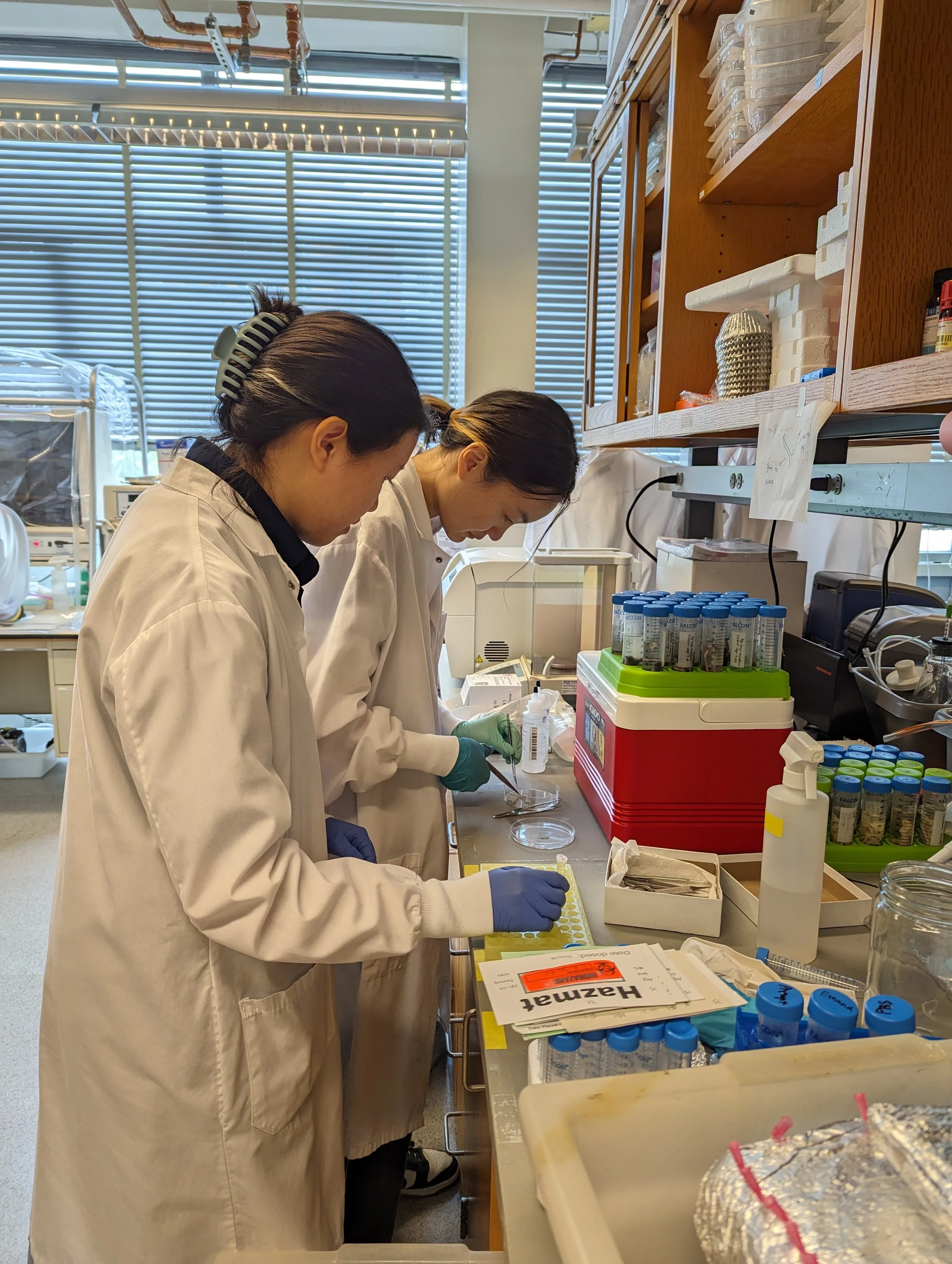
Mouse Models - Using mouse models to study how infections cause organ damage and chronic illness, focusing on Lyme disease.
Connective Tissue Damage and Disorders - Assessing skin and joint problems linked to chronic illnesses and study how connective tissue damage occurs.
Reproductive Health - Researching how infections might cause reproductive and gynecological problems, including studies in mouse models.
Questions that guide our research
Why do some people return to health after an acute infection, while others go on to suffer debilitating chronic illness and diseases?
How do sex differences influence chronic illnesses and immune response to infection?
What is the role of connective tissue damage in infection-associated chronic illnesses?
Can non-invasive testing reveal the underpinnings of neurological dysfunction in chronic illness?
Can immune-based tests help predict who will develop chronic illness after infection?
How do pathogens interact with the immune system to trigger or sustain chronic illness?
What mechanisms underlie reproductive and gynecological conditions associated with infection?

Find us!
